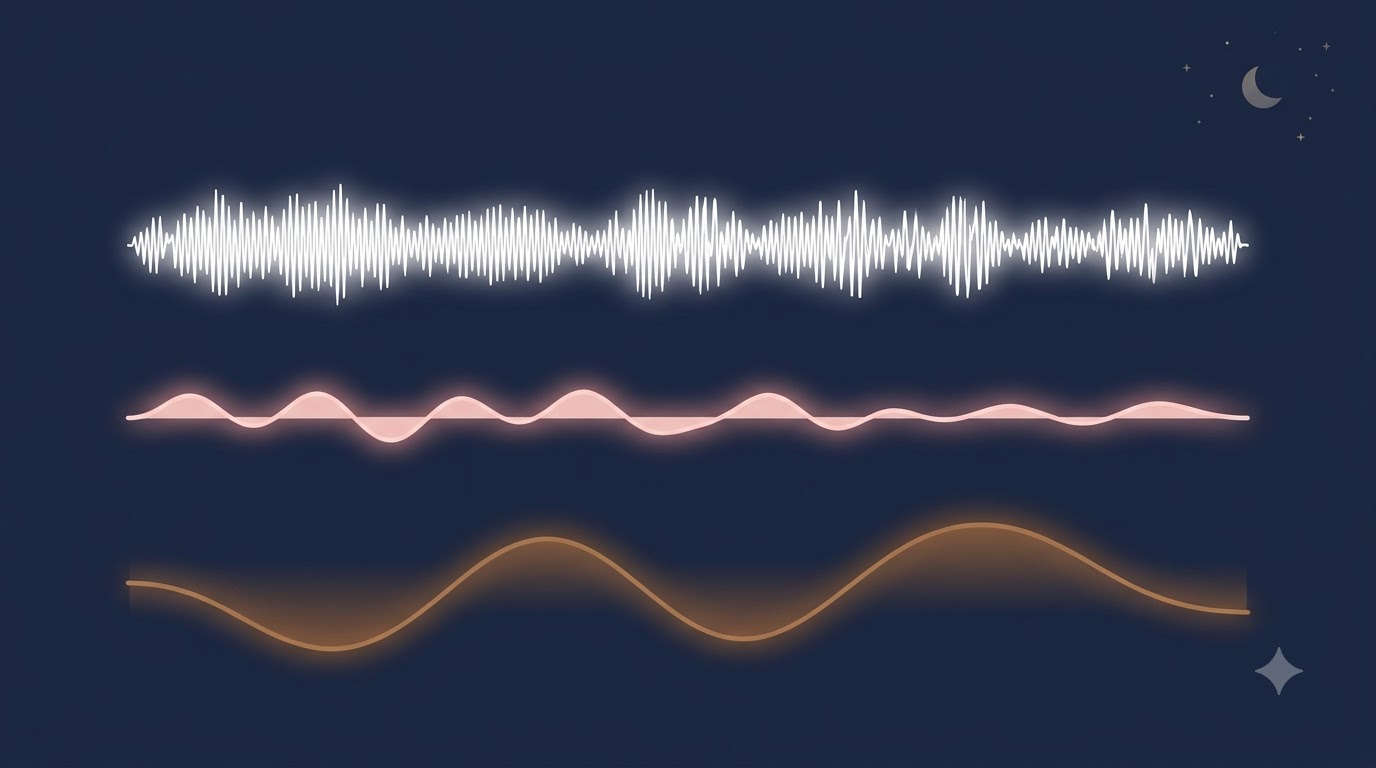
White noise sounds like a hissing TV static or a fan on high. Pink noise is deeper and softer, like steady rain. Brown noise is the deepest, a low rumble like a waterfall or distant thunder. All three can help you sleep by masking sudden sounds. There’s no single “best” color: white noise is great for covering loud environments, while many people find pink or brown noise more relaxing. Pick the one you find most soothing and keep the volume low.
If you live in a noisy apartment, share a bed with a snorer, or work nights, a steady background sound can be a game changer. But open any sleep app, and you’ll see a confusing list of “colours.” Here’s what they mean.
How sound “colors” work
Every sound is made up of different frequencies, from low bass tones to high-pitched hiss. Noise “colours” describe how the sound’s energy is spread across those frequencies:
| Type | What it sounds like | Frequency balance |
|---|---|---|
| White noise | TV static, an air purifier, a fan on high | Equal energy across all frequencies creates a bright, hissy sound. |
| Pink noise | Steady rain, wind through trees | Less high-frequency sound makes it softer and more balanced. |
| Brown noise | A waterfall, ocean surf, low rumble | More low-frequency sound makes it deeper and bassier. |
How background noise helps you sleep
It’s usually not silence that wakes you up; it’s sudden changes in sound, like a door slamming, a dog barking, or a car horn. A steady background noise raises the overall sound level slightly, so those sudden noises stand out less. This is called sound masking.
Steady sound can also become a comforting part of your bedtime routine, a signal to your brain that it’s time to sleep.
White noise
Best for: Loud environments with lots of high-pitched or unpredictable noise, like city streets, hospitals, or shared spaces.
White noise is the most researched of the three. Studies suggest it can help some people fall asleep faster in noisy settings. The downside is that its bright, hissy sound can feel harsh to some people.
Pink noise
Best for: People who find white noise too sharp and want something gentler.
Pink noise has gotten attention from researchers. A few small studies have tested pink noise played in time with deep sleep and found possible improvements in deep sleep and memory, mostly in older adults. Those studies used special timed sound, not a pink noise track playing all night, so results don’t directly apply to sleep apps. Still, many people simply find pink noise relaxing.
Brown noise
Best for: People who like a deep, rumbling sound, or want to cover low-frequency noise like traffic or a neighbour’s TV.
Brown noise became popular on social media, and many people describe it as calming. There’s very little research specifically on brown noise and sleep, so the benefits are mostly based on personal preference.
How to choose and use sleep sounds
- Test all three. Spend a few minutes with each and choose the one that feels most calming to you.
- Keep the volume low. It should be just loud enough to cover background noise, roughly the level of a soft shower or quiet conversation. Long exposure to loud sound can damage hearing.
- Keep the source away from your head. Put a machine or speaker across the room rather than right next to your pillow.
- Use a machine or app with a non-looping sound. Short loops with a noticeable gap or pattern can be distracting.
- For babies: Place sound machines well away from the crib, keep the volume low, and consider turning them off once your baby is asleep. Ask your paediatrician if you have questions.
If noise isn’t the issue and you still have trouble falling or staying asleep for several weeks, talk to a healthcare provider. Ringing in your ears (tinnitus) that keeps you awake is also worth getting checked; sound therapy is sometimes part of treatment.
- White noise is bright and hissy; pink is softer; brown is deep and rumbling.
- All three help by masking sudden sounds that wake you up.
- White noise has the most research; pink and brown are popular for comfort.
- Pick the sound you find most relaxing and keep the volume low.
- Place sound machines away from your head and well away from a baby’s crib.
Frequently asked questions
Is it OK to sleep with white noise every night?
For most people, yes, as long as the volume is kept low. If you rely on it, you may find it harder to sleep without it when travelling, so a phone app can be a useful backup.
Is brown noise better than white noise for sleep?
Not necessarily. There’s more research on white noise, but many people find brown noise more relaxing. The best choice is the one that helps you personally.
Can white noise help with tinnitus?
Background sound can make ringing in the ears less noticeable for some people. Talk to a doctor or audiologist about tinnitus for personalised advice.
Sources
This article is for informational purposes only and is not medical advice. Talk to a healthcare provider about your own sleep.

Krishnakant Pandey is the founder of YuBetterSleep. He has worked in professional digital services since 2010, helping e-commerce brands and IT companies, and has been running the blog SarkariExamHelp.com since 2017. At YuBetterSleep, he turns trusted sleep research from sources like the NIH and CDC into simple, practical guides. He is not a doctor, and he always encourages readers to talk to a healthcare provider about their own sleep.