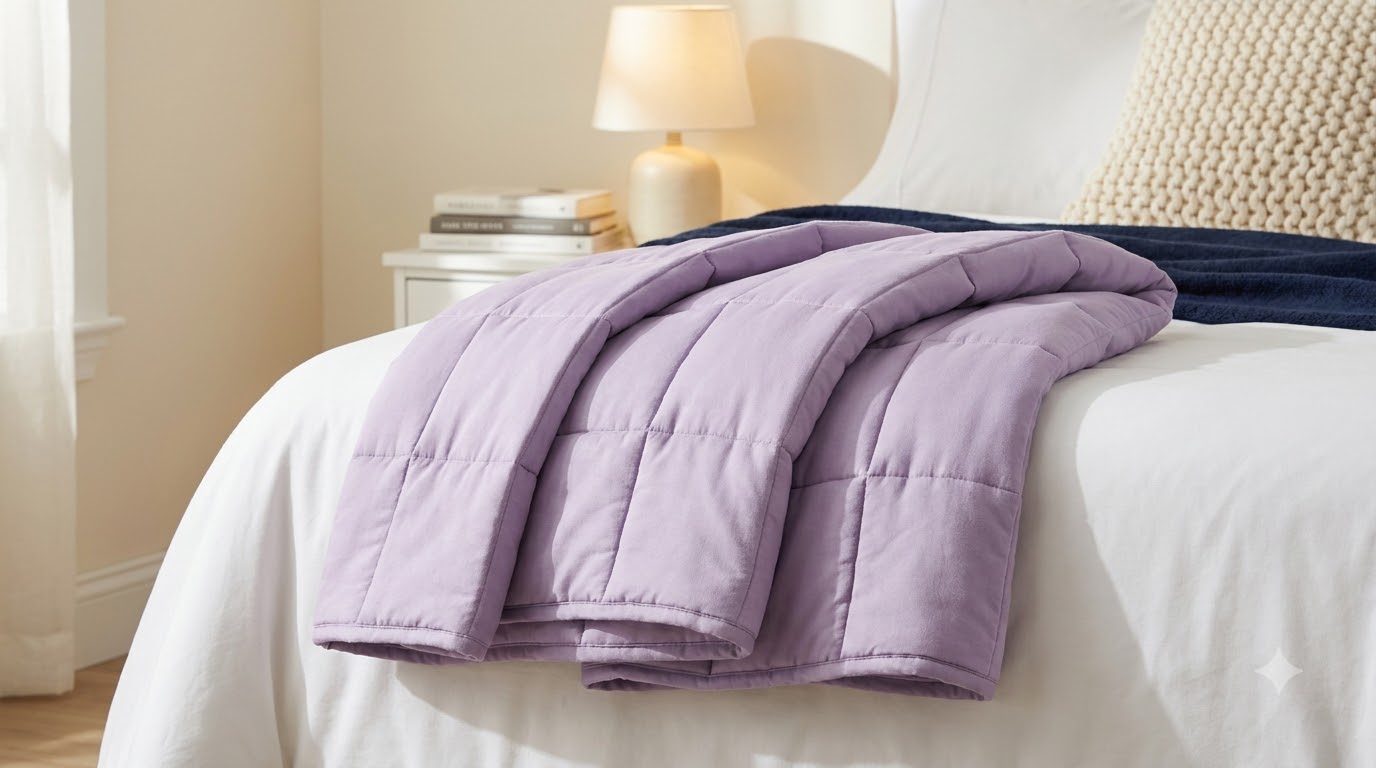
A common rule of thumb is to choose a weighted blanket that’s about 10% of your body weight, rounded to the nearest available size. For example, if you weigh 150 pounds, look for a 15-pound blanket. If you’re between sizes or new to weighted blankets, go slightly lighter. Weighted blankets are not safe for babies or toddlers, and anyone with breathing, circulation, or mobility problems should check with a doctor first.
Weighted blankets have become one of the most popular sleep products in the U.S. Many people say the gentle, even pressure feels like a hug and helps them relax at night. But pick the wrong weight and the blanket can feel either pointless or suffocating.
Here’s how to choose the right one.
Weighted blanket weight chart
Use this chart as a starting point. Blankets usually come in 5-pound steps, so round to the closest size that feels comfortable.
| Your body weight | Suggested blanket weight |
|---|---|
| 100–120 lbs | 10–12 lbs |
| 120–150 lbs | 12–15 lbs |
| 150–180 lbs | 15–18 lbs |
| 180–220 lbs | 20 lbs |
| 220–260 lbs | 25 lbs |
| 260 lbs and up | 25–30 lbs |
This is a general guide, not a strict rule. Comfort is what matters most. If a blanket feels hard to move or makes you feel trapped, it’s too heavy.
Should you go heavier or lighter?
- Go lighter if you’ve never used a weighted blanket, run hot at night, change positions a lot, or feel anxious about pressure.
- Consider slightly heavier only if you’ve used one before and want more pressure, and you can easily move it off yourself.
Many people start with a lighter blanket and find it’s all they need.
What size should you get?
Unlike a regular comforter, a weighted blanket should mostly cover you, not hang over the sides of the bed. If it drapes over the edges, the weight pulls it off during the night.
- Single-person blankets (often around 48 × 72 inches) work for one person on any bed size.
- Queen or king blankets are designed to share, but the weight is spread across two people. If you share a bed and want the same pressure, two individual blankets often work better.
Fill and fabric: what to look for
Fill
Most weighted blankets are filled with small glass beads or plastic pellets. Glass beads are smaller and denser, so the blanket is usually thinner and quieter. Look for small, stitched pockets that keep the fill from shifting to one side.
Fabric for hot sleepers
Weighted blankets can trap heat. If you run warm, look for a breathable cotton or bamboo-derived cover, or a “knit” style blanket with open gaps that let air through. Avoid thick minky or fleece covers in summer.
Washability
Heavy blankets are hard to wash. A removable, machine-washable cover makes life much easier.
Do weighted blankets actually help with sleep?
The research is still growing. A few small studies suggest weighted blankets may help some people with insomnia or anxiety feel calmer and sleep better, while other studies show little difference. Many people simply find them comforting, and that alone can make winding down easier.
A weighted blanket isn’t a treatment for a sleep disorder. If you’re struggling with ongoing insomnia, anxiety, or sleep apnea, talk to a doctor about proven options.
Who should not use a weighted blanket
- Babies and toddlers: Weighted blankets and weighted sleep products are not safe for infants and young children because of the risk of suffocation.
- Children: Talk to your pediatrician first. Children should be able to remove the blanket easily on their own.
- People with sleep apnea or breathing problems, including asthma or COPD.
- People with circulation problems, type 2 diabetes with circulation issues, or low blood pressure.
- Anyone who can’t easily move the blanket off themselves, including older adults with limited strength or mobility.
- People with claustrophobia may find the pressure uncomfortable.
Check with a healthcare provider before using a weighted blanket if you have breathing problems, sleep apnea, heart or circulation conditions, or limited mobility, or before using one with a child. And if you have ongoing trouble sleeping, a doctor can help find the cause.
- Start with about 10% of your body weight, rounded to the nearest size.
- Go lighter if you’re new, run hot, or feel unsure.
- Choose a blanket that covers your body, not the whole bed.
- Glass bead fill and a breathable, washable cover are good choices.
- Never use weighted blankets for babies or toddlers.
Frequently asked questions
Is a 20-pound weighted blanket too heavy?
For someone around 180 to 220 pounds, 20 pounds is a common choice. For a smaller person, it may feel too heavy. If it’s hard to move or feels restrictive, choose a lighter one.
Can I sleep with a weighted blanket every night?
Many healthy adults do. If you wake up sore, overheated, or uncomfortable, try a lighter blanket or use it only while falling asleep.
Can two people share a weighted blanket?
They can, but the weight is shared between you, so each person feels less pressure. Two single blankets usually work better for couples with different preferences.
Sources
This article is for informational purposes only and is not medical advice. Talk to a healthcare provider about your own sleep.

Krishnakant Pandey is the founder of YuBetterSleep. He has worked in professional digital services since 2010, helping e-commerce brands and IT companies, and has been running the blog SarkariExamHelp.com since 2017. At YuBetterSleep, he turns trusted sleep research from sources like the NIH and CDC into simple, practical guides. He is not a doctor, and he always encourages readers to talk to a healthcare provider about their own sleep.