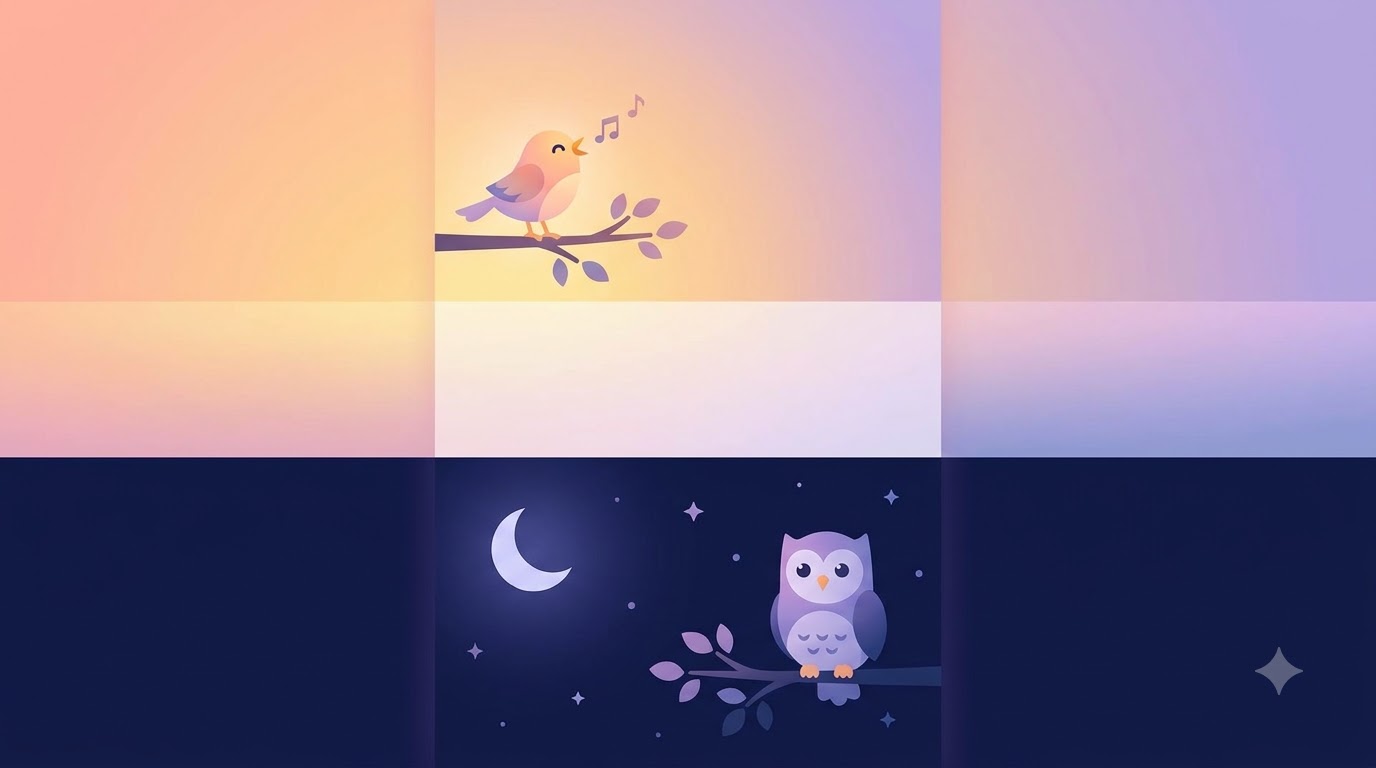
Your chronotype is your body’s natural preference for when to sleep and when to be awake. Early birds feel best in the morning, night owls come alive in the evening, and most people fall somewhere in between. Take the quiz below to find yours, then use the tips to plan your sleep and your day around it.
Take the chronotype quiz
Answer based on what feels natural to you, not what your schedule forces you to do. It takes about one minute.
What is a chronotype?
Everyone has an internal body clock, called a circadian rhythm, that runs on a cycle of about 24 hours. It controls when you feel sleepy and alert, along with body temperature, hormones, and appetite.
Your chronotype describes where your clock naturally sits. Some people’s clocks run early, so they wake up easily and fade by mid-evening. Others run late, so they struggle in the morning but feel sharp at night. Most people are somewhere in the middle.
What decides your chronotype?
- Genes: Your chronotype is partly inherited. If your parents are night owls, there’s a good chance you lean that way too.
- Age: Chronotype changes over life. Young children tend to be early risers, teens and young adults shift later, and many people shift earlier again as they get older.
- Light exposure: Light is the strongest signal for your body clock. Morning light shifts you earlier; bright light at night shifts you later.
Early birds vs. night owls vs. in-betweens
| Type | Natural sleep timing | Peak alertness | Common challenge |
|---|---|---|---|
| Early Bird | Early to bed, early to rise | Morning | Fading early at evening events |
| In-Between | Middle of the night to morning | Late morning to afternoon | Weekend sleep-ins shifting the clock |
| Night Owl | Late to bed, late to rise | Evening | Early alarms for work or school |
What is “social jet lag”?
When your body clock and your schedule don’t match, you can feel like you’re living in the wrong time zone. Researchers call this social jet lag. It’s especially common for night owls who must wake up early on weekdays and then sleep in on weekends. Each Monday can feel like flying across the country.
The fix is consistency: keeping your wake-up time similar every day, even on weekends, and using light to nudge your clock in the right direction.
Can you change your chronotype?
You can’t completely rewrite your genes, but you can shift your body clock somewhat. Night owls who need to wake up earlier can move their schedule with:
- Bright light right after waking, ideally outdoors
- Dim light and fewer screens in the evening
- Small, gradual changes of 15 to 30 minutes at a time
- A consistent wake-up time seven days a week
Read our step-by-step guide on how to fix your sleep schedule for a full plan.
If your natural sleep time is extremely late or early and it makes it very hard to keep up with work, school, or family life, talk to a healthcare provider. Conditions such as delayed or advanced sleep-wake phase disorder are recognized and treatable.
- Your chronotype is your body’s natural timing for sleep and alertness.
- It’s shaped by genes, age, and light exposure.
- Most people are in-betweens; true early birds and night owls are less common.
- A mismatch between your clock and schedule causes “social jet lag.”
- Light and a consistent wake-up time can shift your clock over time.
Frequently asked questions
Is it bad to be a night owl?
No. Being a night owl isn’t unhealthy by itself. Problems mostly come from not getting enough sleep when your schedule forces you to wake up early. Protecting your total sleep time is what matters most.
Can your chronotype change with age?
Yes. Teens and young adults tend to shift later, and many people become more morning-oriented as they get older.
Is this quiz scientifically accurate?
This is a short, fun quiz based on common chronotype patterns. It isn’t a clinical questionnaire or a diagnosis, but it can give you a helpful idea of your natural tendencies.
Sources
This article is for informational purposes only and is not medical advice. Talk to a healthcare provider about your own sleep.

Krishnakant Pandey is the founder of YuBetterSleep. He has worked in professional digital services since 2010, helping e-commerce brands and IT companies, and has been running the blog SarkariExamHelp.com since 2017. At YuBetterSleep, he turns trusted sleep research from sources like the NIH and CDC into simple, practical guides. He is not a doctor, and he always encourages readers to talk to a healthcare provider about their own sleep.