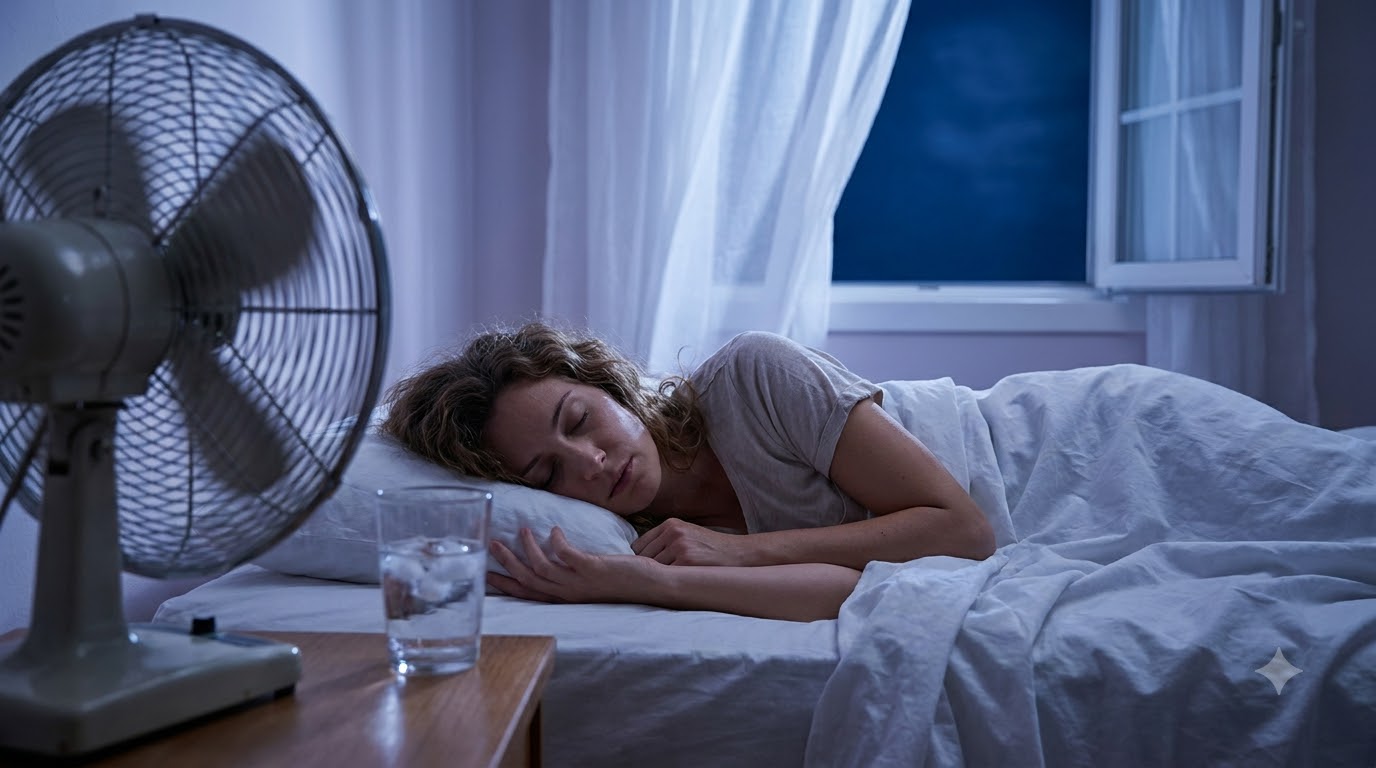
To sleep in a hot room without AC, keep heat out during the day (close blinds and windows when it’s hotter outside), move air at night (open windows when it’s cooler and use fans to create a cross-breeze), and cool your body with breathable cotton or linen bedding, a lukewarm shower before bed, and a cool cloth or ice pack. Sleep as low as possible, since heat rises, and stay hydrated.
Hot nights are miserable. You toss, flip the pillow to the cool side, kick off the sheets, and still lie there sweating. And heat isn’t just uncomfortable: your body needs to cool down slightly to fall asleep and stay asleep.
Many sleep experts suggest a cool bedroom, around the mid-60s Fahrenheit, for the best sleep. Without air conditioning that can be hard to reach in summer, but you can get a lot closer than you think.
Why heat ruins your sleep
As you get ready for sleep, your core body temperature naturally drops. A hot room makes that harder, so you take longer to fall asleep, wake up more often, and get less deep sleep and REM sleep. That’s why hot nights leave you groggy the next day even if you were in bed for eight hours.
Keep the heat out during the day
1. Close blinds and curtains
Sunlight through windows heats a room fast. Keep blinds and curtains closed during the day, especially on south- and west-facing windows. Light-colored or thermal curtains reflect more heat.
2. Close windows when it’s hotter outside
If the outside air is hotter than inside, keep windows shut during the day to trap the cooler air in.
3. Avoid adding heat in the evening
Skip the oven and dryer in the evening, turn off unused electronics, and switch incandescent bulbs to LEDs, which give off much less heat.
Move the air at night
4. Create a cross-breeze
Once the outside air cools down in the evening, open windows on opposite sides of your home. Place a fan facing out of one window to push hot air out, and another facing in on the opposite side to pull cooler air in.
5. Try the fan-and-ice trick
Place a shallow bowl of ice or a frozen water bottle in front of a fan. As the ice melts, the fan blows slightly cooler air toward you. It won’t replace AC, but it can take the edge off.
6. Point the fan at you
Moving air helps sweat evaporate from your skin, which is how your body cools itself. A fan directed toward your bed can make you feel noticeably cooler.
Cool your body down
7. Switch to breathable bedding
Choose lightweight cotton (percale weave feels crisp and cool) or linen sheets. Skip heavy comforters and synthetic fabrics that trap heat. Sleep in loose, light cotton clothing, or less.
8. Take a lukewarm shower before bed
An ice-cold shower can make your body work to warm back up. A lukewarm or slightly warm shower before bed often works better: it brings blood to the surface of your skin, and as you dry off, your body sheds heat.
9. Use cold spots
Keep a damp washcloth or a wrapped ice pack nearby and place it on your wrists, neck, or the backs of your knees. Some people put a pillowcase in a plastic bag in the freezer for 30 minutes before bed for a quick cool-down.
10. Sleep low
Heat rises. If you have a bunk bed, loft, or upstairs bedroom, the air near the floor or on a lower level is usually cooler. A mattress on the floor of a downstairs room can be noticeably more comfortable on the hottest nights.
11. Stay hydrated
Drink water throughout the day so you’re not dehydrated at bedtime. Go easy on alcohol, which can disrupt sleep and add to dehydration.
12. Try a cooling pillow or mattress topper
Gel-infused or breathable pillows and toppers can reduce heat buildup where your body touches the bed. They won’t cool a room, but they can make a hot night more comfortable.
Extreme heat can be dangerous, especially for older adults, babies and young children, pregnant people, and anyone with heart disease or other chronic conditions. Signs of heat-related illness include heavy sweating, dizziness, headache, nausea, confusion, and a fast pulse. If your home stays very hot, consider spending the hottest hours somewhere air-conditioned, like a library or a local cooling center. Call 911 if someone shows signs of heat stroke, such as confusion, a very high body temperature, or loss of consciousness.
- A cool body is key to good sleep — heat makes sleep lighter and more broken.
- Block sun and heat during the day, then ventilate when it cools off at night.
- Use fans to create a cross-breeze and to move air across your skin.
- Choose cotton or linen bedding and take a lukewarm shower before bed.
- Know the signs of heat illness and seek a cooler place if your home gets dangerously hot.
Frequently asked questions
Is it bad to sleep with a fan on all night?
For most people, it’s fine. Some people find that a fan blowing directly on them dries out their eyes, nose, or throat. If that happens, angle the fan away slightly or use it on a lower setting.
Does putting sheets in the freezer work?
It gives you a brief cool feeling when you get into bed, but the effect wears off quickly. It can help you fall asleep, but it won’t keep you cool all night.
What temperature is too hot to sleep?
There’s no single number for everyone, but most people sleep worse as their bedroom gets warmer than the upper 60s to low 70s Fahrenheit. Very high indoor temperatures can also be a health risk.
Sources
This article is for informational purposes only and is not medical advice. Talk to a healthcare provider about your own sleep.

Krishnakant Pandey is the founder of YuBetterSleep. He has worked in professional digital services since 2010, helping e-commerce brands and IT companies, and has been running the blog SarkariExamHelp.com since 2017. At YuBetterSleep, he turns trusted sleep research from sources like the NIH and CDC into simple, practical guides. He is not a doctor, and he always encourages readers to talk to a healthcare provider about their own sleep.